Top 5 Skills You Gain in an Electrical Technician Program
Unlocking Your Potential as an Electrical Technician
As technology advances and the demand for skilled trades remains high, pursuing an electrical technician career offers job security and lifelong learning opportunities. Whether you aim to work in commercial, residential, or industrial settings, your success hinges on the practical skills and knowledge you acquire. Enrolling in apprenticeship programs can be a game-changer, providing structured training and valuable real-world experience.
These programs offer a direct pathway from the classroom to the job site and support you in gaining hands-on expertise, staying current with industry standards, and building your professional network. From understanding crucial safety protocols to troubleshooting complex circuits, your training will cover a blend of essential technical and interpersonal abilities.
Electrical Safety Knowledge
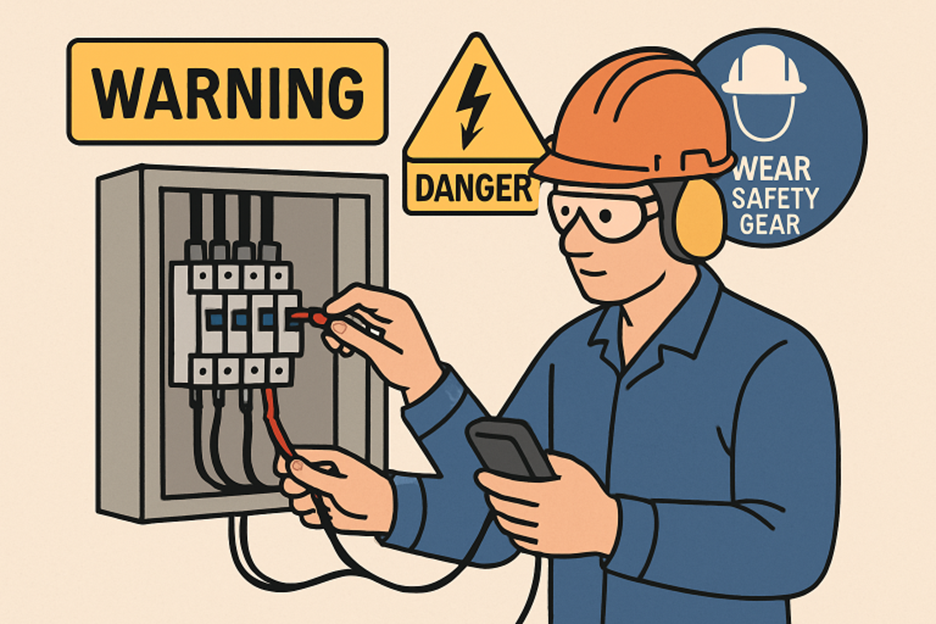
Safety is the cornerstone of any electrical technician’s role. Programs emphasize understanding OSHA safety protocols—not just memorizing rules, but learning why these regulations exist and how they protect you and your coworkers on the job. As an electrical technician, you’ll become accustomed to identifying and mitigating hazards, such as exposed wires, overloaded circuits, and improper grounding.
The importance of personal protective equipment (PPE) and lockout/tagout procedures cannot be overstated. You’ll learn to recognize when and how to use insulated gloves, safety glasses, and grounding tools, and master the lockout/tagout steps to ensure no live current flows during repairs or maintenance. For up-to-date safety standards and guidelines, the Occupational Safety and Health Administration offers a comprehensive overview on its electrical safety standards page.
See also: Ultimate Guide to Energy-Efficient Home Improvements
Blueprint Reading and Interpretation
Electrical blueprints are the visual language of the industry. Swiftly and accurately reading and interpreting these documents is a must-have skill for any technician. You’ll encounter a range of drawings and diagrams—such as one-line diagrams, schematic diagrams, and wiring layouts—each providing essential details about circuits, outlets, and switch locations.
During your training, you’ll learn how to interpret common symbols and notations and translate them into actionable installation or troubleshooting tasks. For example, a real-world case study might involve deciphering a blueprint to locate a malfunctioning outlet in a complex system, efficiently determining the root cause, and executing a repair.
Hands-On Wiring and Installation Techniques
Mastery of wiring and installation is where theory meets practice. Electrical technician programs provide a hands-on environment where you’ll install, maintain, and troubleshoot wiring systems. You’ll work with various types of conduit and cable—from rigid metal to flexible non-metallic—learning which is appropriate for specific applications.
As smart technologies and green energy solutions become more prevalent, your training will touch on the latest techniques to support sustainability, such as solar panel integration or high-efficiency lighting systems. Proficiency with common tools—including voltage testers, wire strippers, and circuit tracers—ensures you can diagnose and resolve issues quickly, minimizing client downtime and risk.
Electrical Theory and Problem Solving
Strong analytical abilities start with a solid grasp of the fundamentals. Your coursework and lab experiences will give you an in-depth understanding of electrical concepts like current, voltage, and resistance—and how they interact in real-world circuits. Through problem-based learning in simulated settings and real job sites, you’ll hone your troubleshooting skills and learn to “think on your feet.”
For example, you might be presented with a circuit that intermittently fails during operation. Using your training, you’ll methodically test voltages, analyze schematics, and identify defective components. This blend of theory and practice makes you an indispensable electrical team member.
Communication and Teamwork
Technical ability alone does not guarantee career growth; strong communication and teamwork do. Reliable electrical technicians must collaborate with clients, coworkers, and inspectors—often translating complex information into clear, actionable instructions. Effective communication makes job sites safer, speeds up project timelines, and elevates client satisfaction.
Programs reinforce the importance of detailed documentation and reporting, so you’ll graduate knowing how to create accurate service records, material lists, and compliance reports. Soft skills like active listening, conflict resolution, and adaptability are integrated throughout the curriculum, ensuring you’re prepared to thrive in diverse workplace environments.
Final Thoughts
The comprehensive skills you gain in an electrical technician program go far beyond textbooks; they’re the building blocks of a rewarding and sustainable career. You position yourself as a highly employable and adaptable professional by mastering safety protocols, blueprint interpretation, practical installation, problem-solving, and interpersonal communication.
Investing in your education opens the door to continuous learning, safer workplaces, and advancement opportunities.